Median life span
14.0years, miniatures in a UK study
Among the longest of any breed in a study of over half a million dogs. VCA gives 12 to 16 years for the breed.[4][3]
What affects it
A brave, loud, loyal German hunting hound in three coats and two sizes. Here is what living with one in a South African home is like, back and all.
Is a Dachshund right for you?
Short legs for tunnels, a deep voice for the trail and a stubborn streak for working alone. That history explains the bark and the digging.
Where the breed comes from
Disc disease is the breed's best-known problem. What raises and lowers the risk, and the signs that need a vet the same day.
Backs and disc disease
Smooth, long or wire, standard or miniature. How they differ in weight, grooming and back risk, and which one suits your home.
Choose a variety
The questions to ask about the parents' backs, eyes and colours, the papers to expect, and the 'rare colour' adverts to walk past.
Finding a puppyQuick answers, each figure from a breed standard, a veterinary source or a study named at the foot of the page. Individual dogs differ.
A small dog with a large personality, a long life and a back that needs looking after. Go through both lists with your household before you choose a variety.
Six simple checks protect you before any deposit, for any breed: meet the puppy with its mother, look at the records, get it written down, and pay a business account, never a person.
Read the six checks
The standard describes an intelligent, lively dog, brave to the point of rashness. It was bred to hunt above and below ground, following game into burrows and giving voice on the trail, and at home that shows as courage, independence, a loud alarm bark and a keen interest in anything that runs or digs.
Dachshunds often attach strongly to one person, and they may chase small animals. They are clever but independent, so they can be stubborn without consistent training. Breed explains only part of a dog's behaviour; parents, early life, training and health matter as much.[1][3]
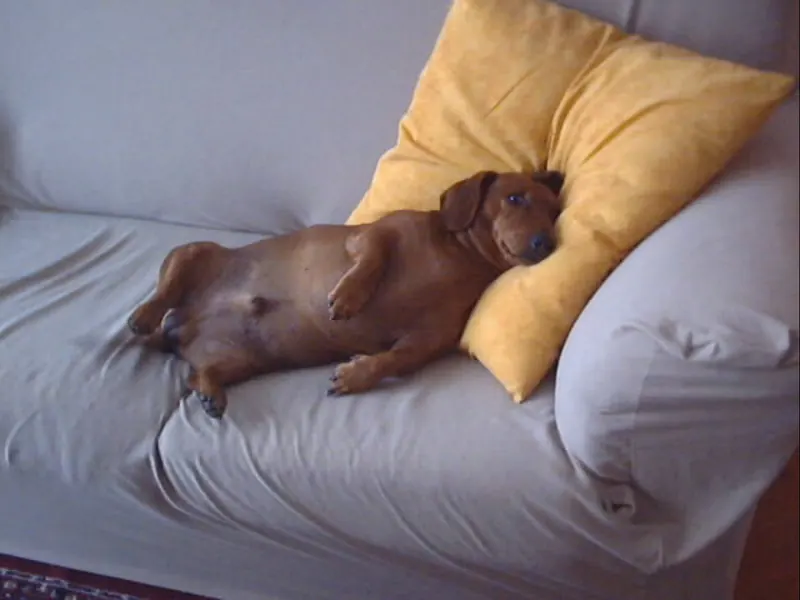
A 2026 study of 488 German Dachshunds found the FGF4L2 variant, behind the short legs and early disc ageing, at an allele frequency of 96.5%. Discs can calcify early and then rupture, pressing on the spinal cord.
That does not mean every Dachshund will have a back episode. In a 2015 survey of 2,031 dogs, 15.7% had had one diagnosed by a vet. Lean weight and regular exercise are the parts of the risk an owner controls.[12][13][8][7]
Backs and disc disease
KUSA covers six varieties with one standard: smooth-haired, long-haired and wire-haired, each in standard and miniature size, with the miniature defined by weight. The FCI adds a rabbit size, for nine varieties in all.
In South Africa the miniature long-haired is by far the most registered: 255 of the 426 Dachshunds KUSA registered in 2025, against 108 miniature smooth-haired. Coat changes the grooming; size changes the weight; the back needs the same care in all six.[1][2][10]
Compare the varietiesSix pages for South African households choosing a Dachshund, with every source listed at the foot.

Disc disease and its warning signs, spine x-ray grades, eye and Lafora DNA tests, and why double dapples are a health risk.
Dachshund health checks
Exercise that protects the back, what the evidence says about stairs, quiet training, grooming three coats, and ticks.
Living with a Dachshund
The costs of a small, long-lived dog, and why insurance that covers spinal surgery comes first.
Budget for a Dachshund
What to ask about the parents' backs, eyes and colours, the papers to expect, and 'teacup' and 'rare colour' adverts.
Buy a puppy safely
Medieval German hunting dogs, the 1888 Teckel club, the KUSA and FCI standards, the six varieties and their colours.
Clubs and registries
Premier Pets is a placement business, never a breeder. Read how a placement works, then ask about a Dachshund.
How we place puppies
Among the longest of any breed in a study of over half a million dogs. VCA gives 12 to 16 years for the breed.[4][3]
What affects itHad a vet-diagnosed episode. Standard smooth-haired dogs were highest at 24.4%, standard wire-haired lowest at 7.1%.[8]
Protecting the backThe miniature long-haired alone registered 255, ninth in KUSA's list of varieties.[10]
Choose a varietyFrom KUSA's registry statistics and two large UK studies. Survey figures come from owners who chose to take part; individual dogs vary, and every source is listed at the foot of the page.
The Premier Pets Directory lists breeders, vets, groomers, trainers and boarding across South Africa. Use it as a list, not a seal of approval, and ask every business you contact the questions in this guide.
Five ways in, each opening a section of this guide.

Which back signs need a vet within a day, which the same day, and why you confine the dog first.

Survey data did not show that banning stairs helps. Here is what does, for puppies, adults and older dogs.

Which colours the standard allows, and why a puppy from two dapple parents is a health risk.

The back-specific evidence on age at neutering, to take to your vet.
Often 12 to 16 years. The miniature's median in a large UK study was 14 years, among the longest of any breed.[3][4]
No, but the risk is high. UK surveys put it at roughly 16% to 21% overall, varying a great deal by variety.[8][14]
A fit adult usually can, and survey data did not show that banning stairs helps. Protect puppies and older dogs from jumping down.[15][8]
Yes. They are vocal alarm dogs, so teach a 'quiet' cue early, before the habit sets.[3]
Neither. They differ in weight, about 4.5 kg against 9 to 12 kg, and both need the same care for their backs.[1][8]
Smooth needs the least grooming, wire needs stripping or trimming a few times a year, and long needs brushing several times a week.[3][5]
With calm, supervised handling. A child should sit on the floor to hold one, and never lift it by the middle; no dog comes with a promise.[3]
Owners often say so, but we found no measured figure. A fixed routine and rewards work best.
A puppy from two dapple parents, at risk of deafness and eye defects. The KUSA standard calls double dapple unacceptable.[16][1]
Talk to your vet. UK breed advice is not before 12 months, because earlier neutering was linked with more back disease.[17][18]
Its size suits one; its bark may not suit the neighbours. Check your body corporate's rules first.[5][9]
Confine it in a crate or small pen and see a vet the same day: it is an emergency.[19]
Look through the breeders listed in the Premier Pets Directory, or search it for Dachshunds, and put this guide's questions about backs, eyes and colours to each one.
Every listing comes from public sources and can be claimed, corrected or removed by its breeder. A listing is not a check: Premier Pets has checked no breeder unless that breeder's page says so.
Written from the sources above for Premier Pets. Last reviewed 27 November 2026. Spot something out of date? Email sales@premierpets.co.za.